
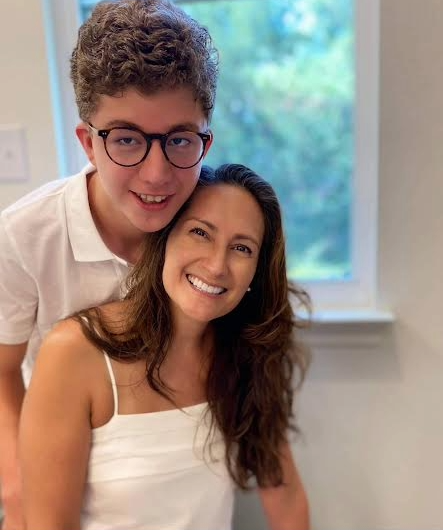
The Young Abled Adult Group was founded and is directed by Angie Slagle. Angie is a deeply compassionate and selfless individual who dedicates her time and energy to supporting people with disabilities. Through creating and encouraging meaningful social activities, she helps others build confidence, connections, and a true sense of belonging. Angie consistently sacrifices her own time to ensure that those she serves have opportunities to enjoy an active social life and feel valued within their community. Her dedication goes beyond obligation—it reflects genuine care, kindness, and a strong commitment to improving the lives of others.
Angie's Story
Her doctors said her son wouldn't live past the age of 6 and would never walk or talk. But one North Texas mom prefers to see hope instead of heartache.
When COVID shut down her job, she started writing to inspire others about "the boy who could."
If everyone has a story to tell, Angie Slagle's should be a bestseller. She’s a surgical assistant by trade. But what was supposed to be a familiar sound when her own son was born wasn't.
"From the moment that I heard his voice, his cry was so different," she said. "And that's when I realized something wasn't quite right."
Her newborn, Andrew, was diagnosed with cat eye syndrome.
"Kids don’t live past the age of six," Angie said. "They usually have a tumor in their kidneys or one of the other organs, and that was devastating."
Angie was told that during his short life, Andrew would never walk or talk or be able to care for himself.
"I just decided that I was going to treat Andrew like any typical child and that I was going to give him the best opportunity I could give him," she said.
Years went by, and Angie did everything she could.
"I hired ABA speech therapists, physical therapists, an entourage of people to help him," she said.
This time, the diagnosis changed to CHARGE syndrome. It’s an acronym that stands for coloboma of the eyes, heart defect, atresia, retardation of the GI, and deafness in the ears.
It was devastating news to any parent. But Angie heard hope.
"He didn't say anything about longevity, so I thought we’re looking up," she said.
By 3, Andrew was reading. By 8, he spoke for the first time. Then, when genome testing became available, there was a final diagnosis of PACS1 gene mutation.
"It just doesn’t matter what box they put them in," Angie said. "Forget about it and just treat him or her as a typical child. Just feed them and help them grow."
It's the message marked by the pages of her new book: "The Boy That Could." The main character is Andrew. The idea came to her during the COVID closure.
"I was thinking, ‘God, what do you want me to do?’ I don’t know what to do next," she recalled.
So Angie did what she's always done and looked for opportunities instead of obstacles. It’s something she sees, Andrew, who is now 16 years old and thriving, do every day.
After all, Andrew is "the boy that could" because his mom doesn't believe in "could not."